
What An Instrument is For

From an exhibition in Dundee to a piano retuned around the pipes — and the approach of Honeymoon Bridge.
An exhibition changes with each room it enters.
Dreaming Pipes began among coffee cups and conversations in the café at An Lanntair in Stornoway. At The Rockfield Centre in Oban, it occupied the Silver Birch Gallery within the daily traffic of rehearsals, workshops and performances. Now, at Dundee Central Library, it has settled among books, readers and people who may have arrived in search of something else entirely.

Three venues have given the same objects three rather different lives. This seems appropriate for an exhibition about an instrument which has spent ten years making its own way into the world.
Libraries contain ideas which have escaped their authors. The Lindsay System has now been in public for ten years and downloadable for six. Versions of it exist in wood, industrial nylon and domestic 3D-printer filament. Two early sets live in the Museum of Piping. One design has been downloaded around 3,000 times and may have become an instrument in places of which I know nothing.
Dreaming Pipes gathers what can be gathered: prototypes, drawings, photographs, films, instruments and some of the music that has grown around them. It remains at Dundee Central Library until 22 August. After this summer, its travels will continue through Birnam and the Highlands and islands, with the Orkney Museum and Glasgow’s Mitchell Library now coming into view.

The exhibition looks backwards because exhibitions must. Every object has already been made; every photograph records a moment which has passed. Yet the odd thing about assembling this history has been the sense that the work is only now arriving at its proper beginning.
For much of the chanter’s development, tunes served as instruments of examination. A melody would reveal a weak note, an awkward crossing or an idea that had behaved beautifully in a drawing and less beautifully once supplied with air. The repertoire questioned the chanter, and the chanter answered as best it could.
That relationship has gradually reversed.
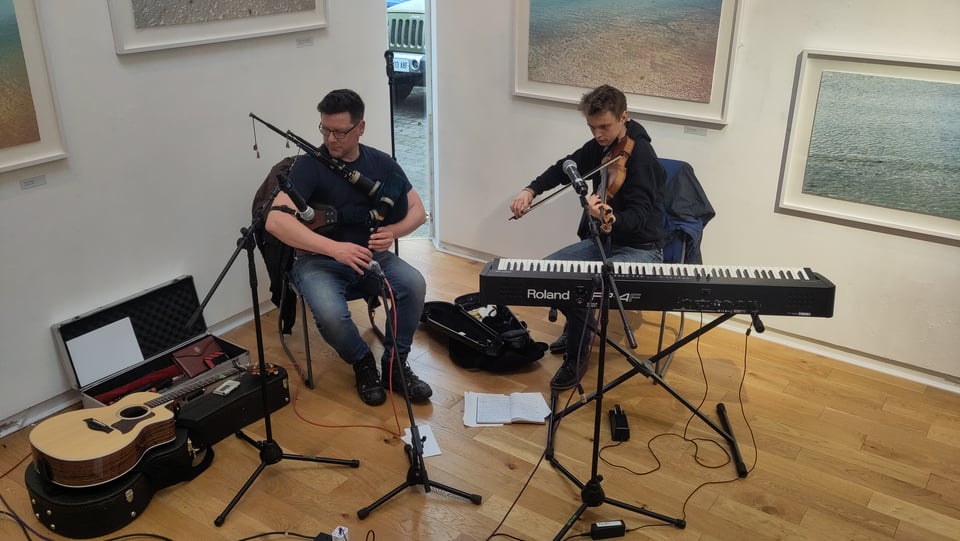
In April, Roo Geddes and I returned to Watercolour Music in Ardgour to record Honeymoon Bridge. It follows Two Boats Under the Moon, but enters a different musical country.
Two Boats was consciously not a piping album. The Lindsay System appeared during its latter half almost as a cameo: a sudden change of light within a record principally shaped by voice, guitar, fiddle and piano. On Honeymoon Bridge, the pipes move to the centre.
The new record runs to two albums and draws together traditional songs and tunes, original writing, and music which has gathered around the chanter during its public life. In places, the pipes assume the structural role previously occupied by the guitar. They do not merely play the melody; they establish the ground upon which the song, fiddle and piano must stand.
This produced one of my favourite moments of the recording.
For “Drunk at Night, Dry in the Morning”, Nick Turner retuned Watercolour’s piano around the intonation of the chanter and drones. The piano, that great immovable piece of musical architecture, was persuaded to leave its equal-tempered grid and enter the tonal world of the pipes.
It is a small reversal, but it says a great deal about the album.
The Scottish smallpipes continually sound their tonal centre through the drones. Every note exists in relation to that sustained field of sound. Roo has developed an unusually close understanding of how the fiddle can enter it: not by selecting the nearest nominal pitch, but by listening for the exact place in which an interval settles.
Roo’s fiddle brings another history into the room. It belonged to his great-great-grandfather and was played at the Kelvingrove Bandstand in 1904. On Honeymoon Bridge, that inherited and storied instrument meets another whose history it is helping to write.
This is not quite an encounter between tradition and invention. Both instruments are made from accumulated decisions, and both remain alive only while musicians continue to discover what they can do.
The expanded compass of the Lindsay System matters throughout the record, but seldom as spectacle. The additional notes alter the weight of a phrase, allow a tune to keep descending or ascending where it once had to turn, or open an unexpected route through a familiar melody. The question is no longer whether those notes can be made to sound. It is where they can take us.
That question will follow us through August.
Alasdair Roberts and I begin the month at Sidmouth Folk Festival. Roo and I then play at Piping Live! in Glasgow on Thursday 13 August, before I travel to Birnam Arts for a concert with Alasdair the following evening on Friday 14th. On 19 August, Roo and I return to Dundee for Friends of Wighton.
Piping Live! will also include Ceòl Nua, a gathering devoted to contemporary and experimental work with the pipes. This year’s programme brings together Erwan Keravec, Harry Gorski-Brown and Flynn Butler Fraser, whose music draws traditional piping into ambient and electroacoustic space. The existence of a distinct platform for this work feels significant. There are now enough different answers to the question of what pipes might become for a festival to place them in conversation with one another.
In September, the enquiry turns back towards making.
Working with Joel Chaney of Tern360, I have been exploring whether plastic recovered from discarded fishing gear can meet the unforgiving demands of a playable chanter. From Shore to Score will form part of Orkney International Science Festival, with a workshop on 3 September followed by a Dreaming Pipes illustrated talk and concert on 5 September along with pianist John Lowrie.
Discarded fishing gear becoming a musical instrument sounds satisfyingly mythical, but the material must first survive a less romantic judgement. The chanter has to play. Its dimensions must hold, the reed must behave, and the finished instrument must produce music rather than merely a persuasive story about itself.
Then, on 15 September, Honeymoon Bridge will be released.
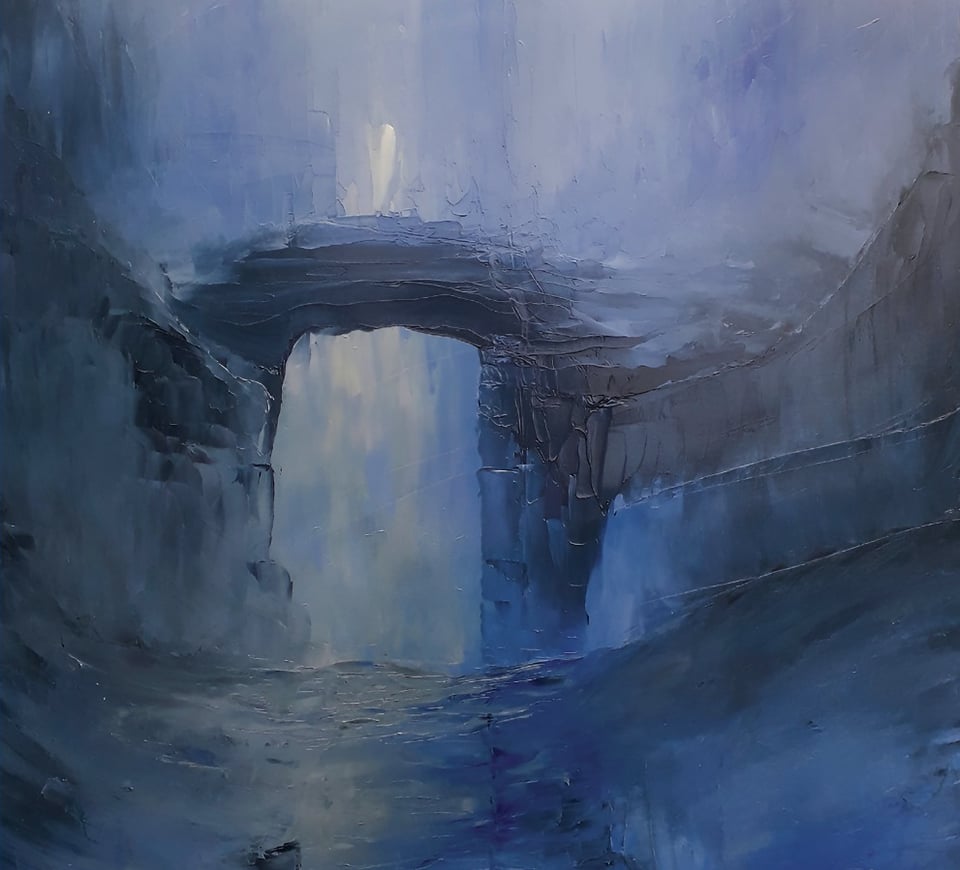
The exhibition contains the evidence of how the instrument came into being. The marine-plastic project asks what else it might physically become. The concerts ask what happens when it enters the company of other musicians.
And Honeymoon Bridge is, for now, my fullest answer to the more important question: what the instrument is for.
In the weeks ahead
6–7 August — Sidmouth Folk Festival, with Alasdair Roberts
10 August — Ceòl Nua, Nice N Sleazy, Glasgow
13 August — Piping Live! with Roo Geddes, Glasgow
14 August — Birnam Arts with Alasdair Roberts
19 August — Friends of Wighton with Roo Geddes, Dundee
Until 22 August — Dreaming Pipes, Dundee Central Library
3 September — From Shore to Score, Orkney International Science Festival
5 September — Dreaming Pipes talk and concert, Orkney International Science Festival
15 September — Honeymoon Bridge
More from the album before then.
All the best,
Donald


