
The Virtual Chanter: A Chanter You Can Play From Anywhere
The Virtual Lindsay System Chanter is live — play it from anywhere, test your own music, and help imagine what it could become.

The Virtual Chanter: A Chanter You Can Play From Anywhere
The Virtual Lindsay System Chanter is live — play it from anywhere, bring it your own music, and explore what an instrument can become online.
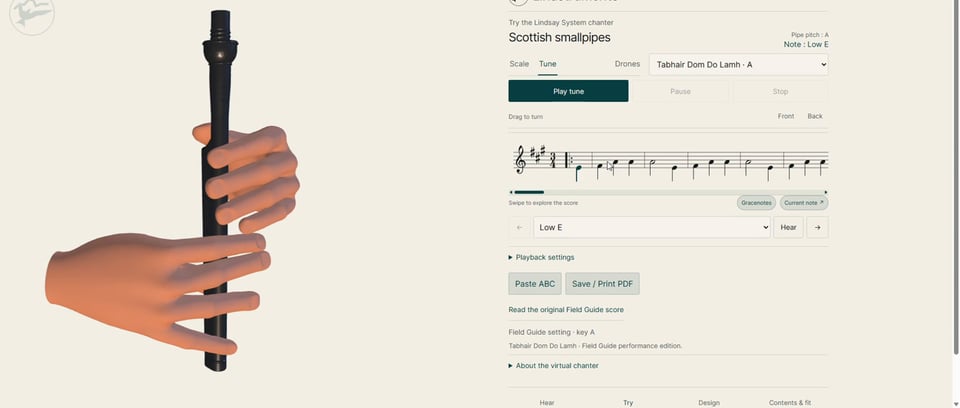
There are several real chanters on and around my bench just now, along with pipes being played, adjusted, recorded, packed and sent out into the world. Another Lindsay System chanter is now travelling through a different kind of space: inside the new Lindstruments website.
This is the Virtual Lindsay System Chanter.
You can turn it around in your hands, look at it from the front or back, hear the notes, watch the fingers move, follow the score, change the tempo and set the drones underneath it. You can work through the familiar nine-note scale, explore the full set of 25 fingerings, or choose one of the tunes already waiting there.
Better still, you can bring your own music. Paste in ABC, import ABC or MusicXML, and the chanter will show you how the melody lies beneath the fingers. Notes outside its range are clearly marked. You can save the result as a PDF or make a video from it, and share it with a friend or on social media. It opens straight away, and your tune stays in your own browser for as long as you keep the site open; copy & paste the tune, and save it in a text file, if you want to keep it and work on it some more.
This is the Lindsay System chanter opened wide: its sound, compass, fingerings, drone world and music, alive beneath your hands wherever you happen to be.
The sound has been made from recordings of the instrument. The fingerings belong to the Lindsay System. The hands move with the notes and gracenotes, the score travels with the music, and the four drone voices can be assembled in the combinations the real pipes make possible: bass A or B, baritone D or E, tenor A or B, and alto D or E.
The moment I want to bring closer is the one in which a piper thinks, ah, I see what this does. Range, fingering, tuning, compass, drones and intonation come together here as one playable idea.
I built the Virtual Chanter as a practical doorway into the Lindsay System, and it has opened a much wider idea.
For a piper, it can answer a very immediate question: how would this note, scale or tune sit on the chanter, and how would it feel against a particular drone setting?
For a learner, it offers a clear view of both hands, front and back, beside a moving score. A fingering can be slowed down, turned around, held and revisited in mid-phrase.
For a composer or arranger, it can test a musical line against the real compass of the instrument before rehearsal. For a curious listener, it makes visible the relationship between notation, fingering and sound. For an instrument maker or designer, it suggests that an instrument might travel with a living digital counterpart: something that can be handled, heard and questioned.
And for piping more broadly, this points towards a powerful role for virtual instruments in remote learning. A learner living far from a tutor can see the fingering from every angle, slow the movement, follow the score and hear the note against the drones. With Lindsay System players spread around the world and teaching expertise concentrated among a small number of people, this kind of tool can bring the instrument and its musical knowledge directly to the learner.
That is the conversation I would most like this first public version to begin.
If you are a piper, teacher, learner, composer, maker, arranger — or simply somebody who enjoys seeing how an instrument works — please try it and reply to this email. What would you use it for? What should a virtual instrument be able to show us next?
Quite a lot has happened since my last letter. The Lindsay System travelled through Sidmouth Folk Festival and Birnam Arts with Alasdair Roberts, then Piping Live! in Glasgow and Friends of Wighton in Dundee with Roo Geddes.

Ceòl Nua brought contemporary and experimental piping into the middle of that summer conversation — a fascinating development, and my first opportunity to enjoy and appreciate Flynn Butler-Fraser's emerging work on the Lindsay System. Erwan Keravec's ensemble's performance of Terry Riley's In C at Glasgow's Barrowlands will remain in the mind's ear and eye indefinitely.
And while all this was unfolding, Dreaming Pipes was completing its first season at Dundee Central Library. It is now booked ahead as far as spring 2029, with enquiries from as far as Poland alongside a solid programme across Scotland.

The Orkney International Science Festival became the turning point between that outward-facing season and the work now gathering momentum in the workshop.
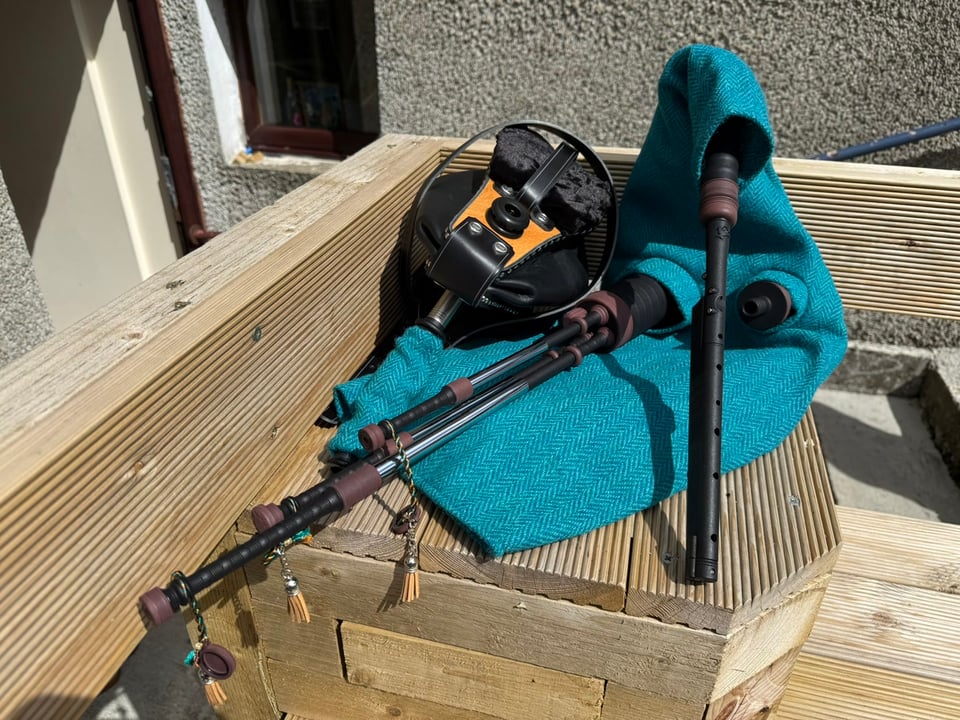
First came From Shore to Score, made with Joel Chaney of Tern360: a handling exhibition, conversation and performance built around a new question for the Lindsay System — what happens when a playable chanter is made from plastic recovered from discarded fishing gear? People could handle the raw material, prototypes, printed components and partly worked chanters, then hear the finished idea become music.
Two nights later, Dreaming Pipes came home to Orkney. At the Orkney Club in Kirkwall I traced the Lindsay System through twenty years of experiment, invention and musical practice, using the instruments, images and early prototypes to tell the story before playing a concert set on the pipes that emerged from it.
That week gathered the touring, exhibition and public story of the year into one place. From there, the energy turned towards making: instruments on the bench, owner guides, digital tools, the new website, and the next stage of the Lindsay System taking shape here in the workshop.
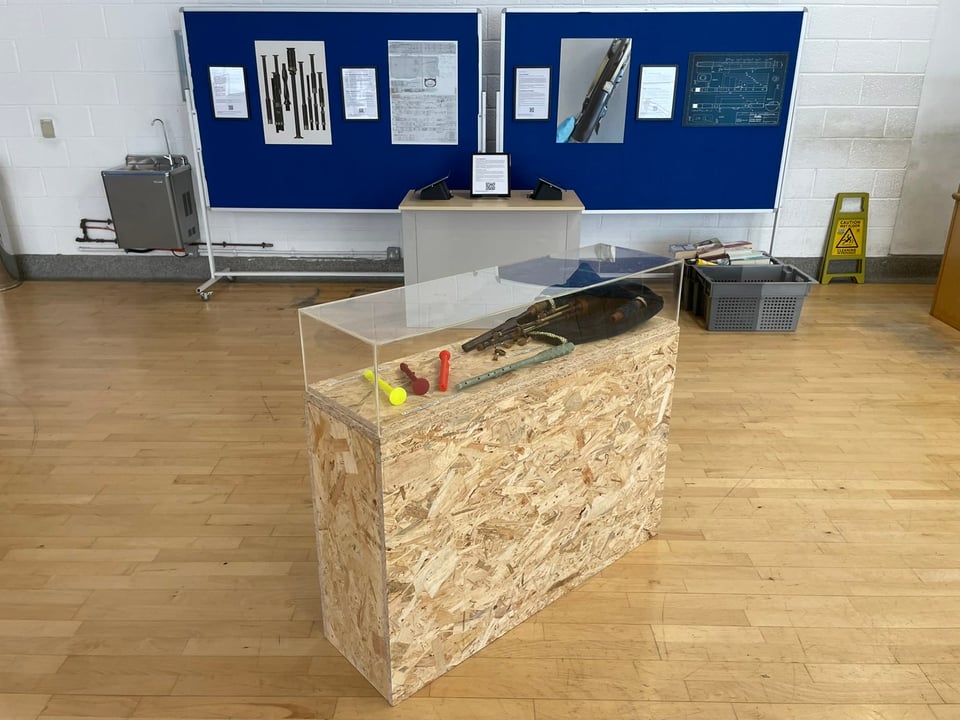
Sets and chanters have been leaving Orkney for the Highlands, Korea and Cornwall, among other destinations.
Before each set goes into its case, I have been giving it a last proper play and recording some of what happens. Partly this is quality control: every note, drone and mechanism gets one last examination. Partly, if I am honest, it is because I have always found it difficult to send an instrument away without one final tune.
One of those farewells was Sí Bheag, Sí Mhór. I played it on a set immediately before packing, and the response to that little film has been extraordinary. It confirmed something I know in my bones: an instrument declares itself through music, played on the actual thing, at the moment when it is ready to go out and become somebody else's.
The same work has produced two new Lindsay System Owner's Field Guides: one for the complete Scottish smallpipes and one for the chanter. They bring the setup, fingering, maintenance and music into a coherent companion for each new instrument. The Virtual Chanter belongs to that same impulse — to make the knowledge around the instrument as carefully as the instrument itself.
The Virtual Chanter is part of a complete rebuilding of the Lindstruments website.
The new site begins with four simple invitations: hear the instruments, try the chanter, learn, and explore what is being made. The pipes, the music, the guides and the digital tools now live together and speak to one another.
That feels important. Lindstruments is a workshop, a body of music, a design project, a learning project and a growing community of players. The new site gives all of those things room to speak to one another.
Honeymoon Bridge now arrives in October, superseding the 15 September date carried in my last letter. I will send the settled date and listening details as soon as the remaining release path is properly in place.
The album is already woven through this new phase of Lindstruments. Tunes from the repertoire have become part of the Field Guide, the Virtual Chanter and the nightly workshop recordings; the same music is now moving between record, instrument, score, lesson and screen.
In a curious way, that is exactly what I hoped the Lindsay System would eventually make possible.
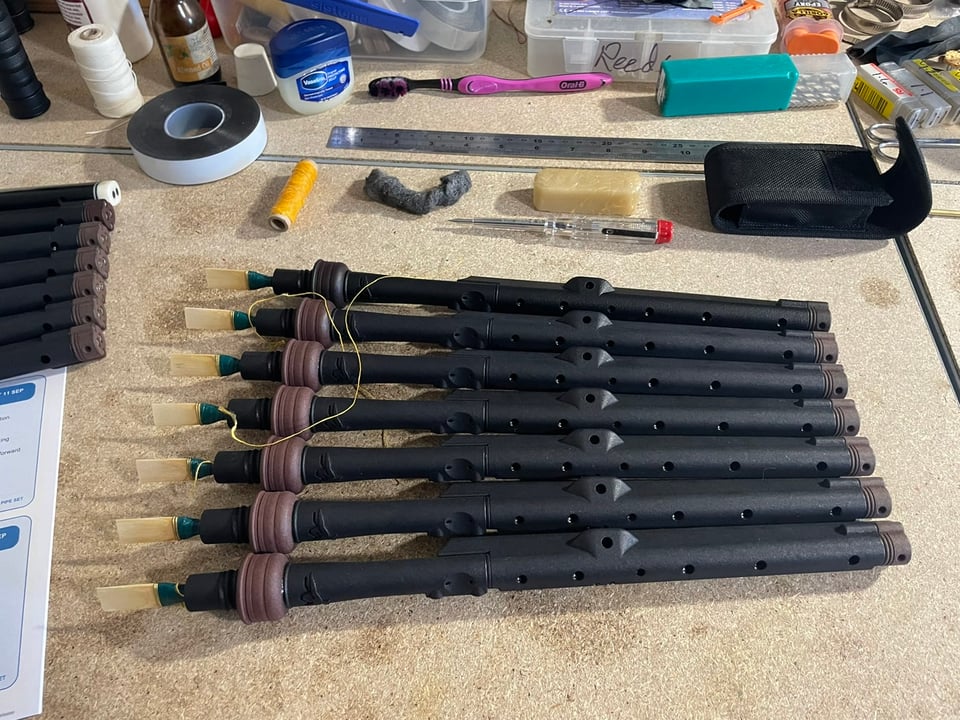
The most helpful thing you can do with this issue is also the simplest: try the Virtual Chanter, then send it to one person who might genuinely enjoy or use it.
The right piper, teacher, composer or musician may find that it opens a door they had not known was there.
Try and share the Virtual Chanter →
And if exploring it turns into wanting the physical instrument: orders placed before 1 October 2026 will be built for dispatch by 1 December 2026.
Explore the Lindsay System Scottish smallpipes →
Explore the Lindsay System chanter →
All the best,
Donald


